
Florida Public Records Law
Florida's open-records framework starts with the state constitution and the Public Records Act. The act opens agency records to inspection and copying unless a specific exemption applies. A requester does not have to say why a record is wanted, and a request can be oral or written. The agency can ask for clarification when a request is too vague, but it should not demand a reason.
The core statute is Chapter 119, Florida Statutes. The screenshot below shows Florida Statutes Chapter 119, the Public Records Act.
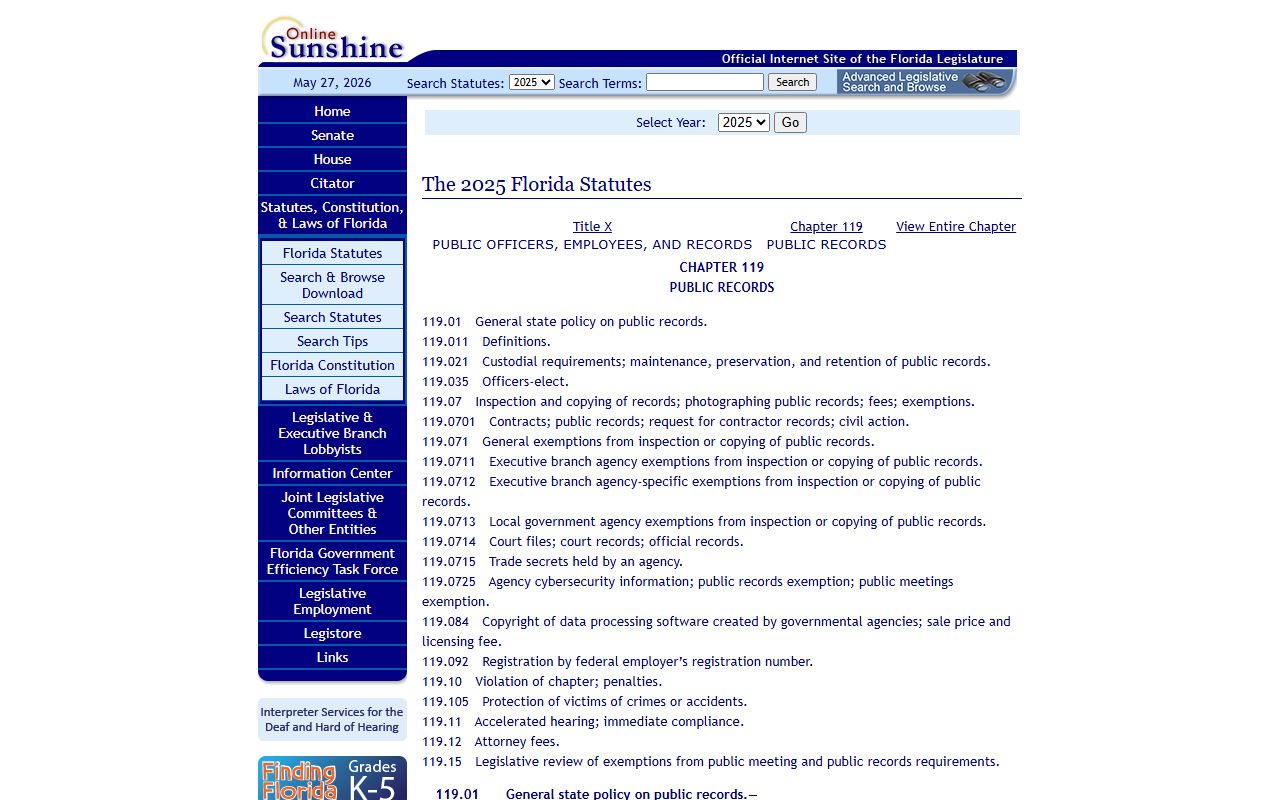
Chapter 119 covers many Clerk administrative records, while court case files follow a separate court rule explained next.
Judicial Records Under Rule 2.420
Court files are a separate branch of records. They follow Florida Rule of General Practice and Judicial Administration 2.420, which sets court-record access, confidentiality categories, and the steps to handle confidential information. So an Escambia County court case is a judicial record, while a Clerk budget or contract is an agency record.
The practical result is similar wide access, with different procedures for the confidential parts. The screenshot below shows Florida Rule 2.420.
A dispute over a court record is usually handled by motion and judicial review under this rule, not the agency process.
What Records the County Clerk Maintains
The Escambia Clerk wears two hats, as a court officer and as the county comptroller. For records, the Clerk holds court case files, recorded official records, marriage records, traffic case files, and probate records, plus financial records tied to county government. Court records and official records overlap but are not the same.
Under Florida law, a public record is broad. It includes documents, papers, letters, maps, photographs, recordings, data, and other material made or received in connection with official business, unless an exemption applies. So an Escambia County record can be a paper file, an email, or a database export. The format does not control whether it is public; the content and any exemption do.
Use the court-records search for case dockets and filings. Use the official-records search for recorded instruments. The Clerk maintains records such as these:
- Court case files for civil, criminal, family, probate, and traffic matters.
- Official records, including deeds, mortgages, liens, and satisfactions.
- Marriage licenses and recorded marriage records.
- Recorded judgments and notices affecting property.
- Certified, plain, and exemplified copies on request.
How to File a Public Records Request in Escambia County
A request works best when it is specific. Name the record holder, the record, and the format you want. Follow these steps:
- Identify the office that holds the record, such as the Clerk.
- Describe the record with names, a case or booking number, and a date range.
- Choose a request method: web form, email, mail, or in person.
- State the format you want and whether you need certification.
- Ask about fees before a large request runs up an extensive-use charge.
Avoid asking for "everything about a person" when a targeted request will work. A broad request can trigger a clarification step or an extensive-use fee for staff time.
Public Records Request Form Fields
Whether you use a web form or an email, the same details help the office find the record fast. The table lists the fields a good request includes.
| Field | Required | Notes |
|---|---|---|
| Record holder | Yes | The Clerk or the specific county office. |
| Case or booking number | No | Speeds the search when known. |
| Names and date range | No | Narrows the request. |
| Record type | Yes | Court file, official record, or other. |
| Format | Yes | Paper, electronic, or certified copy. |
| Contact information | Yes | So the office can respond or quote a fee. |
Response Timelines
Florida law does not set a fixed deadline in days. The standard is a reasonable time to gather and review the records. A simple request for one document moves fast. A broad request that needs redaction or a large data pull takes longer, and the office should explain any delay.
If a record holds both public and confidential parts, the office should provide the public part and redact the rest where feasible. The custodian should not stall a request, and a requester who is unlawfully refused can seek court enforcement, where a court may award fees.
Public Records Fees in Escambia County
Fees must be tied to legal authority. Ordinary copies and certification have statutory amounts, and an extensive-use charge applies when a request needs heavy staff or computer time. Confirm the current figures with the Clerk. The table lists the common charges.
| Item | Amount |
|---|---|
| Plain copy per page | Statutory per-page rate; verify with the Clerk |
| Certified copy | Per-page fee plus certification |
| Extensive-use charge | Added for heavy staff or IT time |
| Electronic records | Cost based on the medium and effort |
Note: A request for a record does not require a reason, but a fee can apply when the work to produce it is substantial.
Records That Are Exempt
Florida confidentiality is exemption-specific. A record is not confidential just because it is old, embarrassing, or tied to a criminal case. There must be a statute, rule, or court order. Several categories come up often, and each rests on its own law.
Juvenile justice records are restricted. The screenshot below shows Florida Statutes Chapter 985, which limits juvenile justice records.
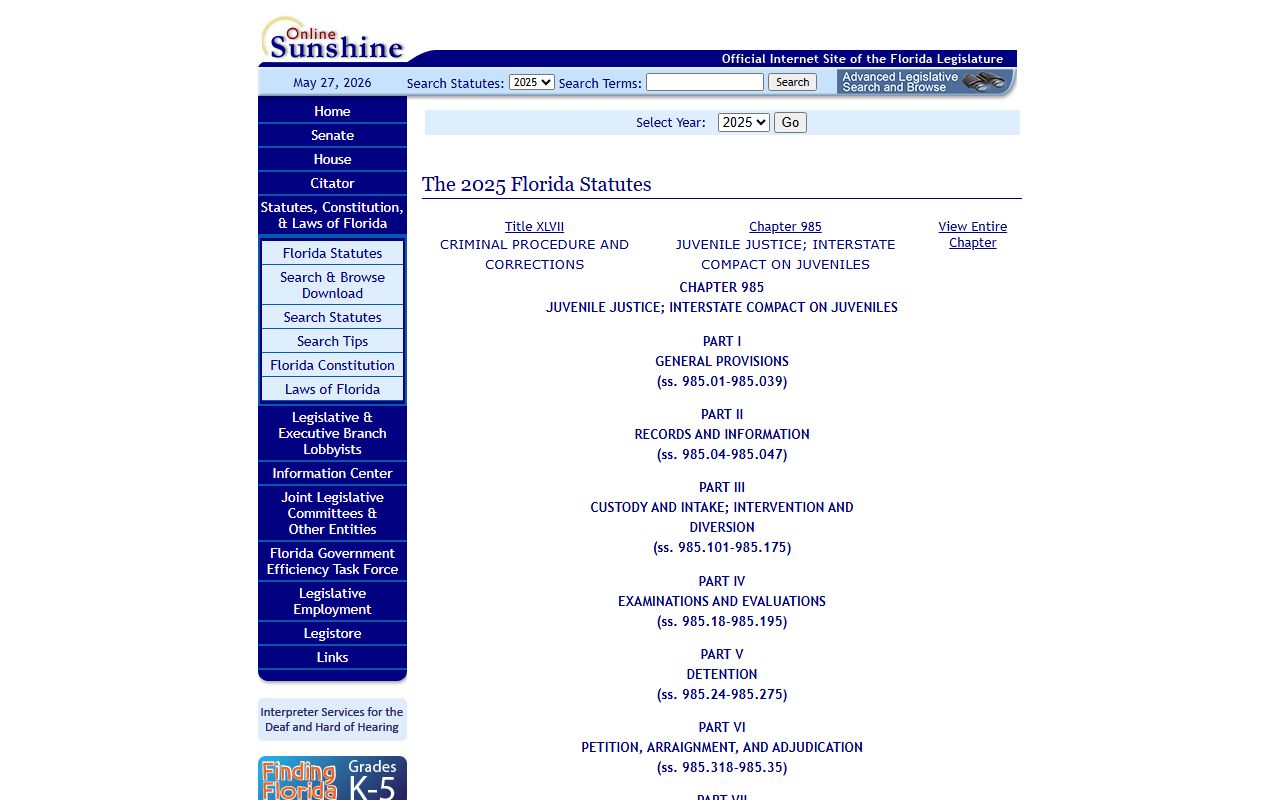
Access to juvenile delinquency and dependency files is usually limited to parties, parents, attorneys, and authorized agencies.
Adoption records are sealed. The screenshot below shows Florida Statutes Chapter 63, the adoption confidentiality law.
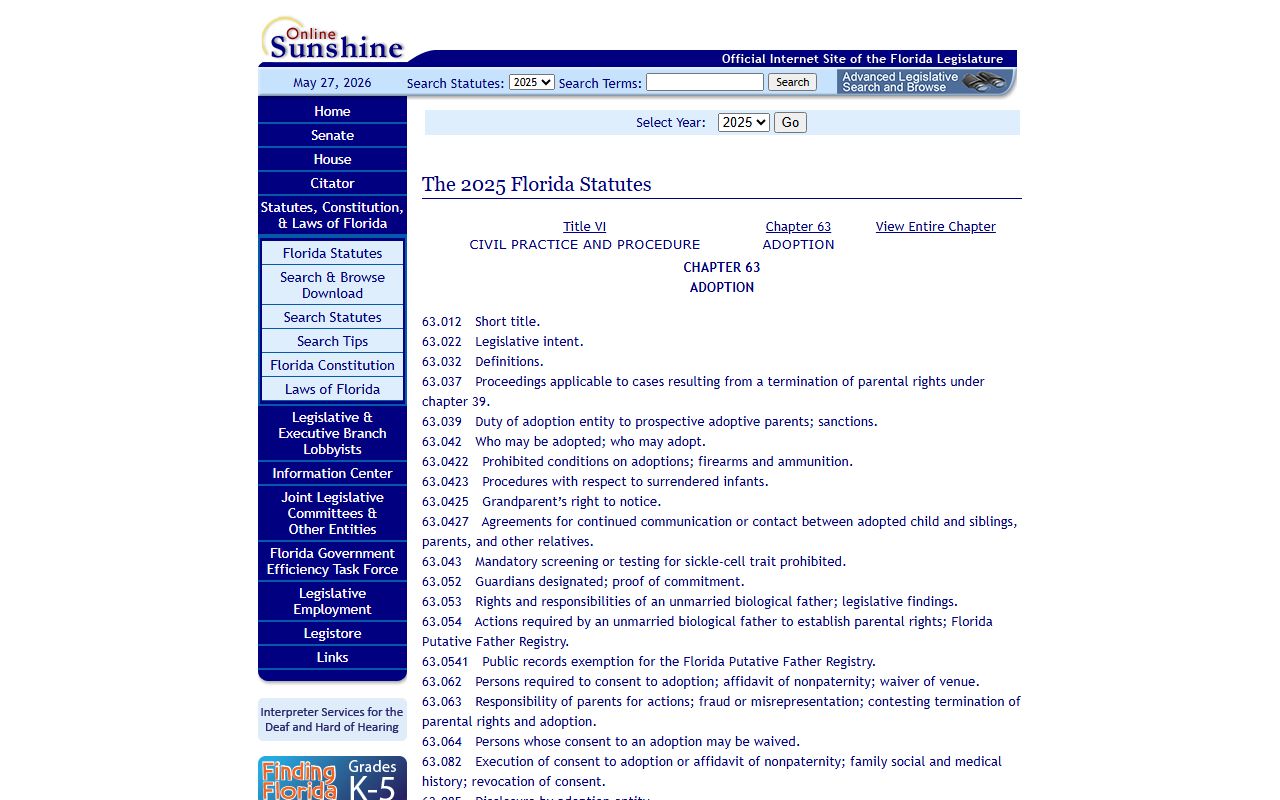
Adoption files generally require statutory authorization or a court order to view.
Mental-health treatment records are protected. The screenshot below shows Florida Statutes Chapter 394, which covers mental-health confidentiality.
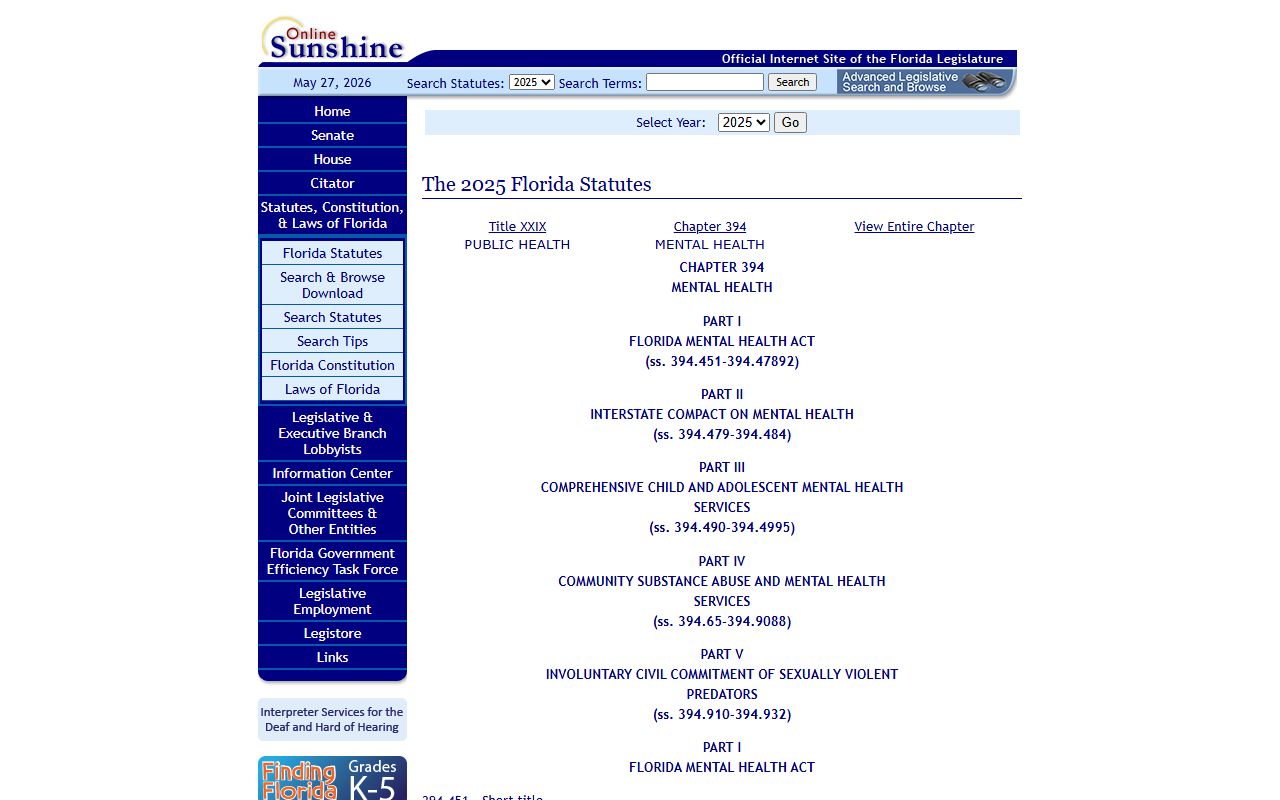
Clinical and Baker Act records stay confidential even when a related criminal docket is public.
Sealed and expunged criminal records are controlled separately. The screenshot below shows Florida Statutes Chapter 943, which governs sealing and expunction.
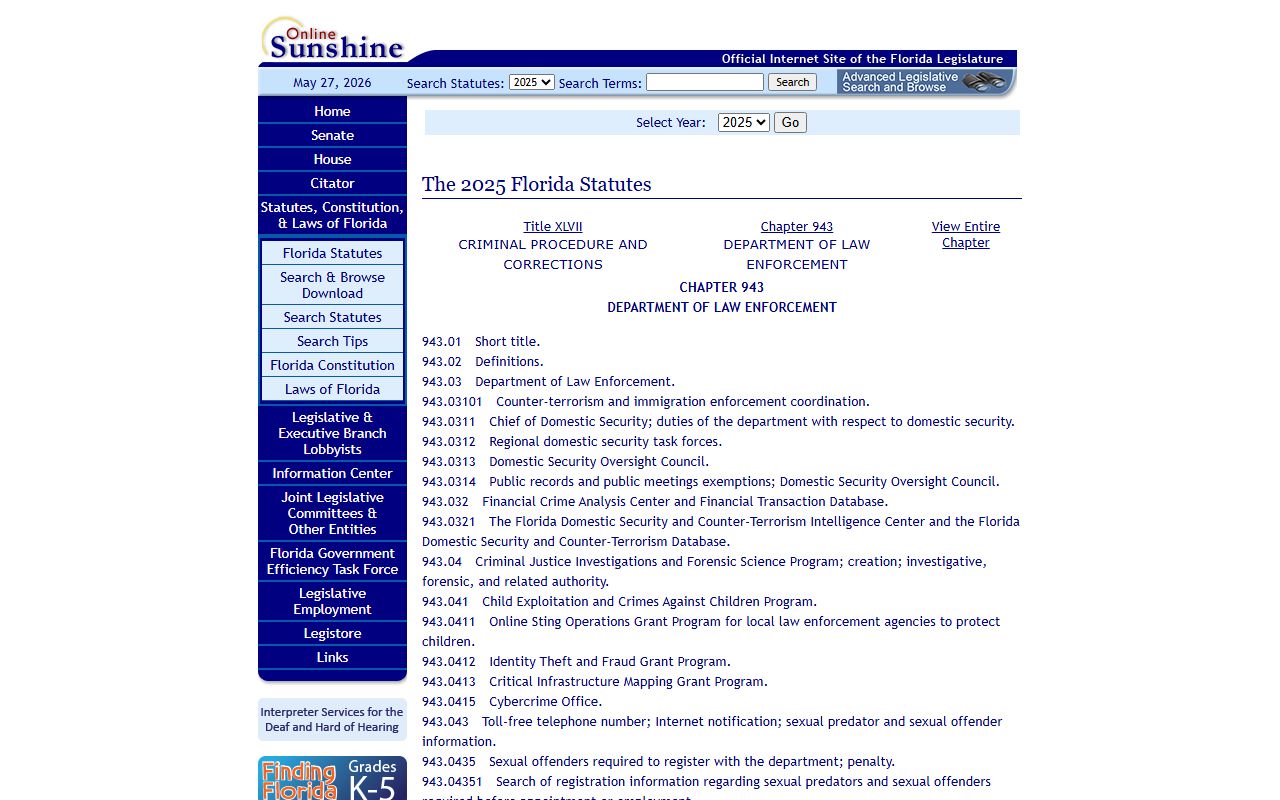
Sealing limits public access while some agencies keep view rights, and expunction removes ordinary access more fully. See arrest records for the seal-and-expunge process.
If Your Request Is Denied
A denial should name the exemption or rule behind it. If a request is refused, you can narrow it, ask for a redacted version, request supervisor review, or use the Attorney General's open-government resources. For a court record, Rule 2.420 procedures control many access disputes.
A requester who is unlawfully refused under Chapter 119 can seek judicial enforcement, and a court may award attorney's fees when an unlawful refusal is shown. The safest proof of a final outcome is a certified Clerk record, not a portal screenshot.
Records Not Held by the Escambia County Clerk
The Escambia County Clerk holds court and recorded records, but other public records sit with other agencies. Knowing who keeps what saves a wasted request. A request sent to the wrong office only gets redirected, which costs time.
For an Escambia County public records request outside the Clerk's hands, go to the source. Arrest and jail records come from the Escambia County Sheriff's Office and Corrections. Driver records come from the Florida Highway Safety and Motor Vehicles agency. Statewide criminal history comes from FDLE. State prison and supervision records come from the Florida Department of Corrections. Each of these is its own custodian under Florida law, with its own request process and fees.
When in doubt, ask the Escambia Clerk where a record lives. The office can point you to the right custodian even when it does not hold the record itself.