
Escambia County Circuit Court Overview
The Circuit Court is the trial court of general jurisdiction in Florida. In Escambia County, it handles felonies, family law, probate, guardianship, juvenile cases, and civil disputes above the county-court limit. It also hears some appeals from the County Court. The court sits in the M.C. Blanchard Judicial Building in downtown Pensacola, and the Escambia Clerk keeps its records.
One naming note matters here. Florida's "District Court of Appeal" is an appellate court, not a trial court. The federal "U.S. District Court" is a separate federal trial court. The local general trial court is the Circuit Court. Keeping these straight prevents a search in the wrong system.
Courts Serving Escambia County
Escambia County court matters are spread across a few courts and divisions, all centered downtown. The table lists the main courts and what each handles.
| Court / Division | Role | Address | Notes |
|---|---|---|---|
| Circuit Court | Felony, family, probate, larger civil | 190 W Government Street, Pensacola | First Judicial Circuit |
| County Court | Misdemeanor, traffic, small claims, lower civil | 190 W Government Street, Pensacola | Lower trial court |
| Probate Division | Estates, guardianship, mental health | 190 W Government Street, Pensacola | Division of Circuit Court |
| Family Division | Dissolution, custody, support | 190 W Government Street, Pensacola | Some records restricted |
| First District Court of Appeal | Appeals from circuit trial courts | Tallahassee, FL | State appellate court |
Circuit Court vs. County Court vs. Municipal Court
Florida runs a two-tier trial system, plus limited municipal code matters in some cities. The split decides which court holds a case and which records you search. The table compares the three.
| Circuit Court | County Court | Municipal / Code | |
|---|---|---|---|
| Criminal | Felonies | Misdemeanors | City ordinance matters |
| Civil | Larger civil and foreclosure | Small claims and lower civil | Local code enforcement |
| Family / Probate | Yes | No | No |
| Appeals From | County Court in some matters | Goes up to Circuit or District Court of Appeal | City process |
For the lower court in detail, see the Escambia County Court page.
How a Case Moves Through the Escambia County System
A case follows a path that depends on its type and level. The Circuit Court sits in the middle of the trial system, with the County Court below and the appellate courts above.
Case flow: County Court › Circuit Court › First District Court of Appeal › Florida Supreme Court
A felony case moves from arrest and first appearance, to a State Attorney filing, then arraignment, discovery, motions, and a plea or trial in Circuit Court, with sentencing at the end. A divorce starts with a petition in the family division, then service, financial disclosures, a parenting plan if children are involved, and a final judgment. Appeals are not do-overs. An appellate court reviews legal error from the record and does not take new evidence, and the deadline to appeal is short.
Other case types follow their own routes. A probate estate opens with a will filing and petition, then appointment of a personal representative, notice to creditors, an inventory, and a final accounting. An eviction runs faster, with a complaint, a summons, a tenant response, a hearing, and a writ of possession if the landlord prevails. Many of these matters appear in Circuit Court, while smaller civil and misdemeanor cases stay in the County Court, which is why the case number and division tell you where to look.
Civil, Family, and Criminal Divisions
The Circuit Court organizes work into divisions. Civil handles foreclosure, contract disputes, and other larger matters. Family handles dissolution, paternity, support, and injunctions, where child and financial documents can be restricted. Criminal handles felonies, with dockets that show arrest capias, the charging information, arraignment, plea, sentence, and probation events.
Probate and guardianship run as a division of the Circuit Court, with sensitive medical and financial material protected. Juvenile delinquency and dependency are heavily restricted under Florida law. To read any of these dockets, use court records, and to follow events on a case, use court dockets.
The First Judicial Circuit
Escambia County is part of Florida's First Judicial Circuit, which also covers Santa Rosa, Okaloosa, and Walton counties. The circuit assigns judges and divisions and runs court administration for the region, including ADA and interpreter services. Judge assignments can change because of rotation, recusal, or administrative order, so the hearing notice is the controlling source for the date, courtroom, and judge.
The circuit also runs problem-solving courts, including drug court, veterans treatment court, and mental health court. Pensacola's military presence makes veterans court especially relevant. Eligibility depends on the charge, an assessment, and judicial acceptance.
Municipal and Lower Court Matters
Below the trial courts, some cities handle local ordinance and code matters through municipal processes. These are not the same as County Court criminal or civil cases. A city code matter is verified with the city court or code-enforcement office, not the county Clerk's case portal.
Magistrates and hearing officers also assist the Circuit Court on certain matters, such as some family and civil proceedings. Their recommendations go to a circuit judge for a final order, which is why the signed order, not a recommendation, controls the outcome.
Federal Courts in Escambia County
Federal cases that arise in the Pensacola area do not run through the Circuit Court. Escambia County sits in the U.S. District Court for the Northern District of Florida, a separate federal trial court. The screenshot below shows the U.S. District Court for the Northern District of Florida.
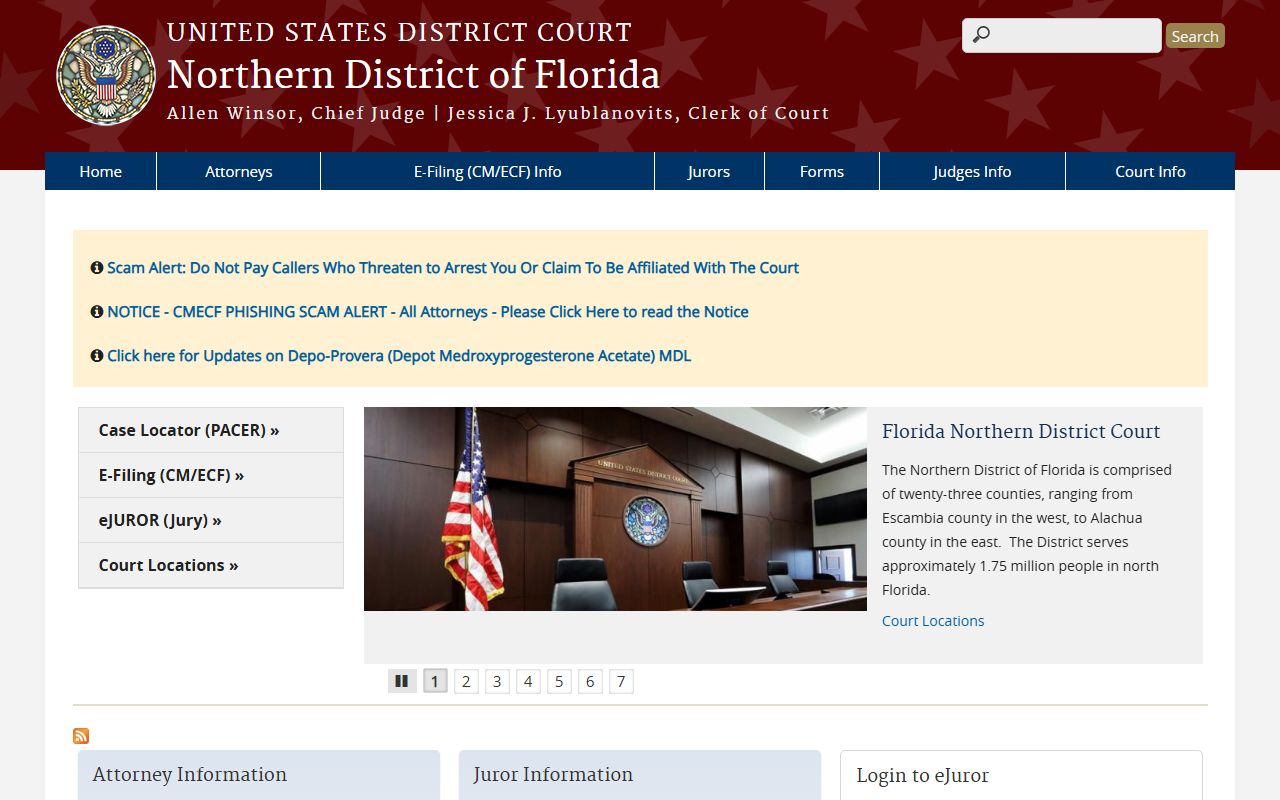
The federal court handles federal crimes, civil rights, employment, and federal-question civil disputes, which the state Circuit Court does not.
Attorneys file federal documents through CM/ECF. The screenshot below shows the Northern District of Florida CM/ECF portal.
The public generally views federal dockets through PACER rather than the filing system.
PACER provides public access to federal case records for a fee. The screenshot below shows PACER case access.
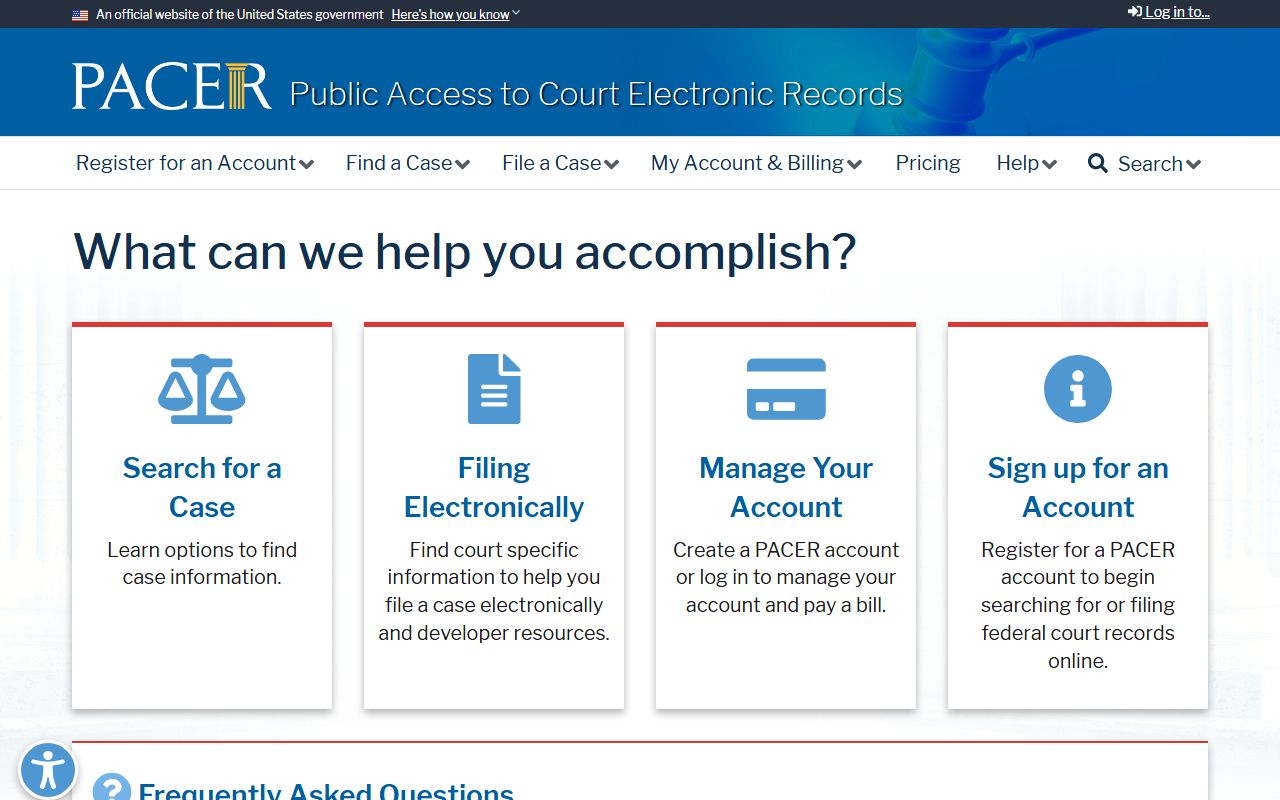
Registration is required, and PACER charges per page unless a fee waiver or threshold applies.
Bankruptcy is its own federal court. The screenshot below shows the U.S. Bankruptcy Court for the Northern District of Florida.
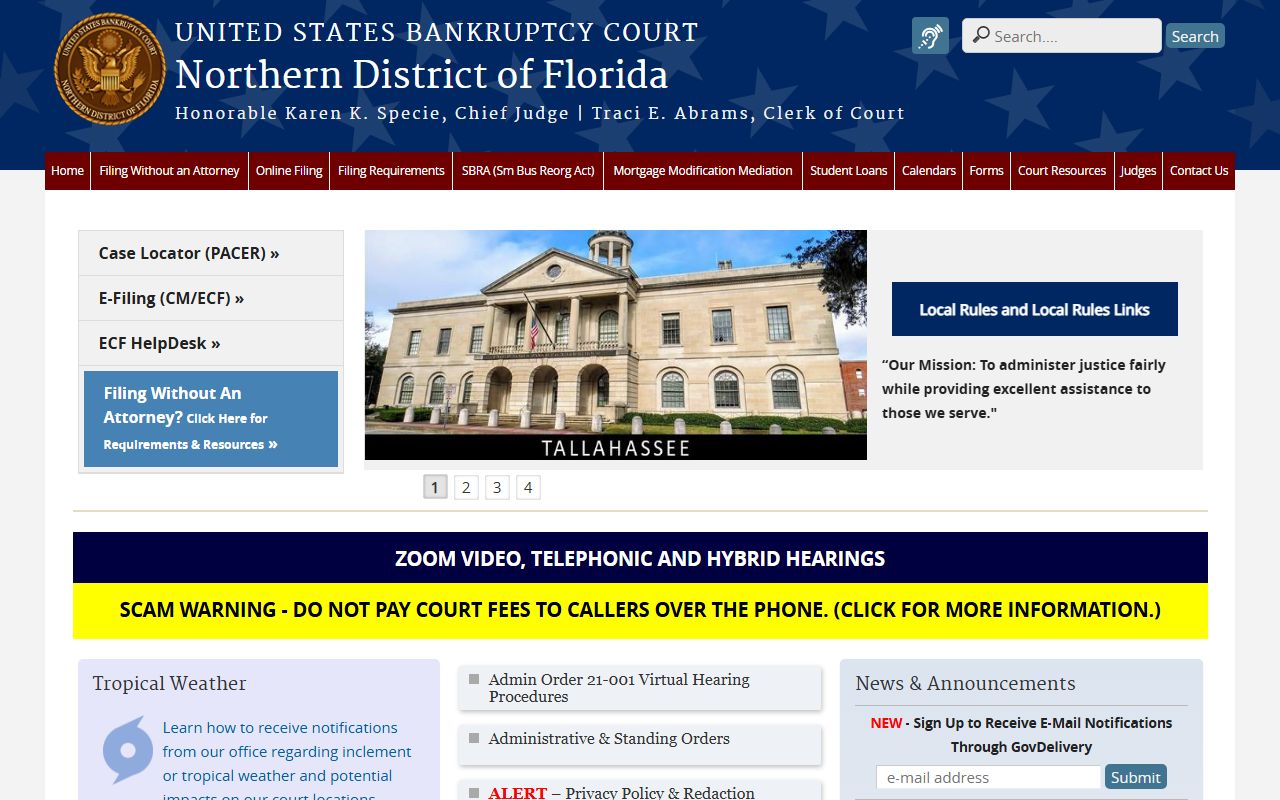
Bankruptcy filings are federal matters and are not found in the Escambia County court portal.
Federal appeals from this district go to the Eleventh Circuit. The screenshot below shows the U.S. Court of Appeals for the Eleventh Circuit.
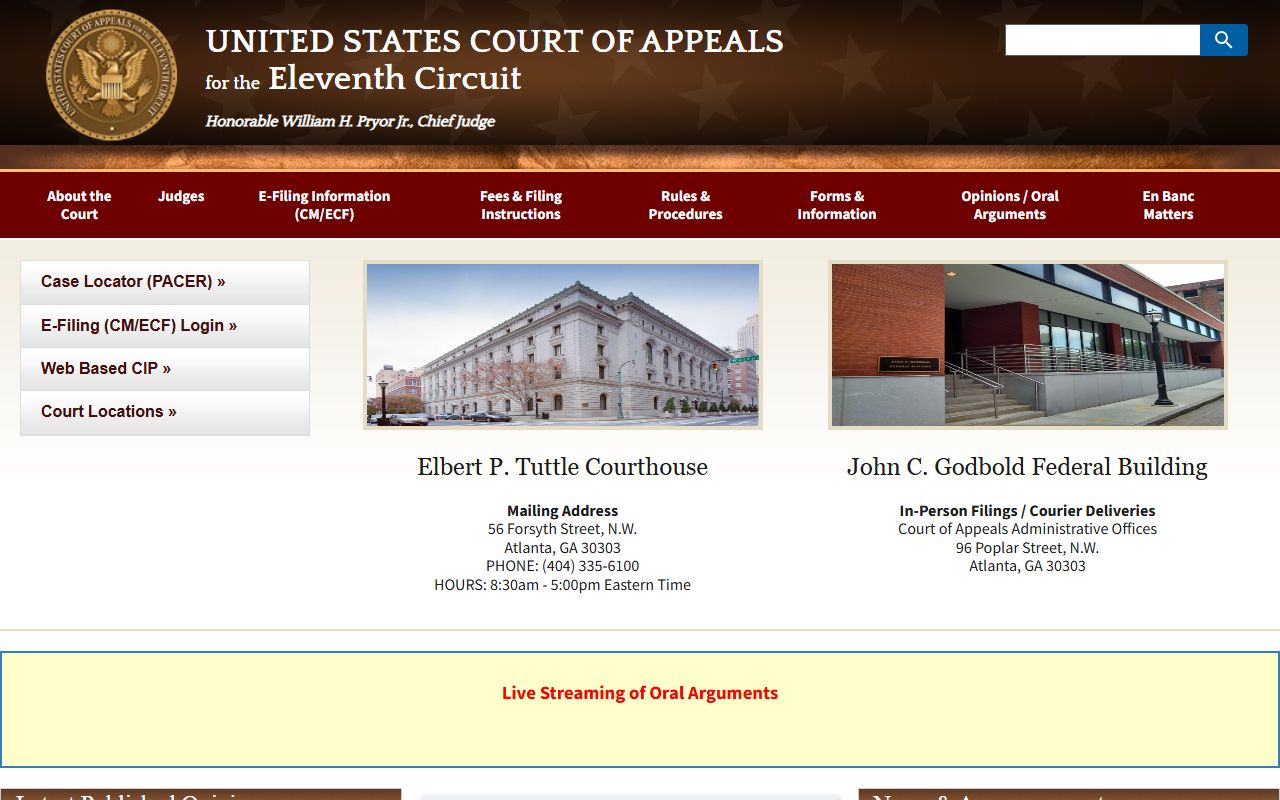
The Eleventh Circuit reviews legal error from the federal district court, much as the state appellate court reviews the Circuit Court.
The prosecutor in federal cases is the U.S. Attorney. The screenshot below shows the U.S. Attorney's Office for the Northern District of Florida.
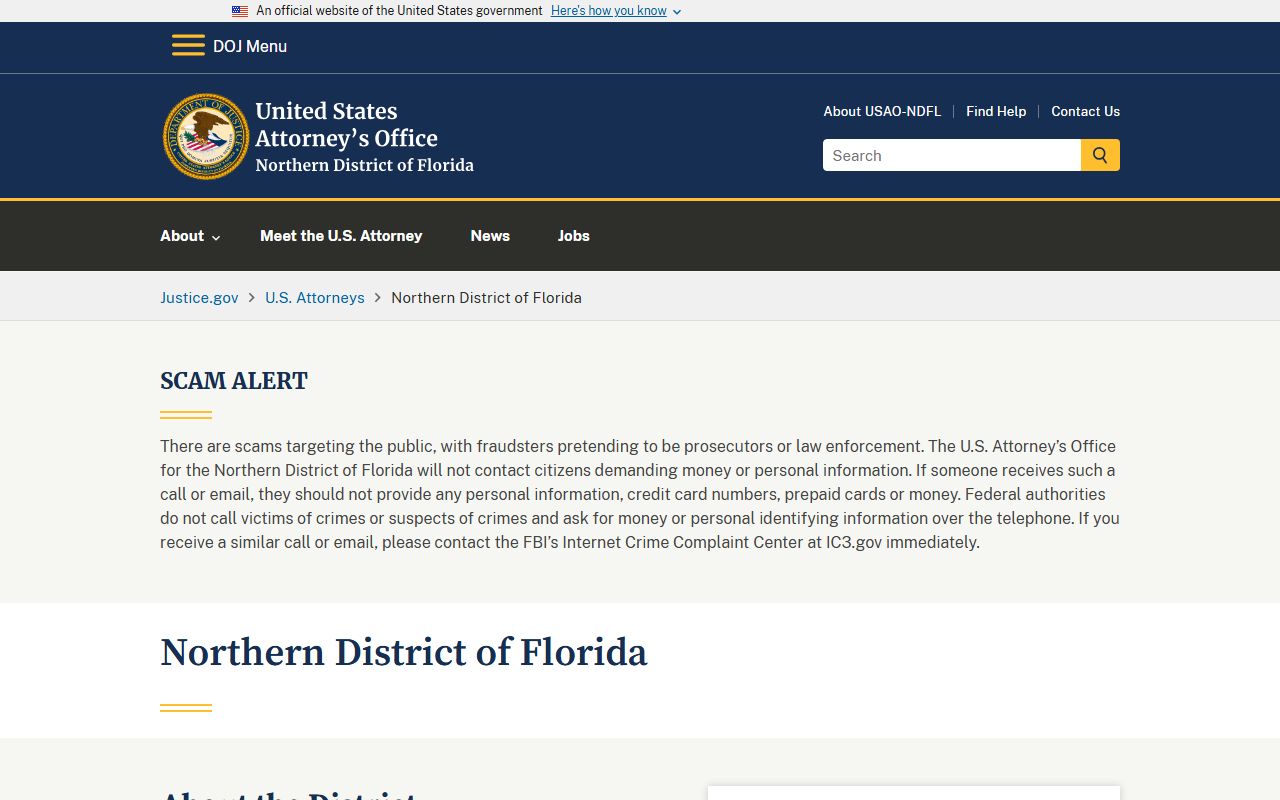
For a state case, the State Attorney prosecutes and the Escambia Clerk holds the record, not these federal offices.
Visiting the Circuit Court in Pensacola
The Escambia County Circuit Court sits in the M.C. Blanchard Judicial Building at 190 W Government Street, Pensacola, Florida 32502. The building holds courtrooms, judicial chambers, jury space, and Clerk court counters. It is in the downtown government district, near county offices and the legal-services core. The jail and corrections complex is a short drive north.
Expect airport-style security screening at entry. Weapons and contraband are prohibited, and recording or photography in courtrooms is controlled by court rule and the judge. Parking downtown is metered or paid, and official pages do not post one rate table for every lot, so confirm rates with the City of Pensacola. For ADA accommodations or an interpreter, contact the First Judicial Circuit before the hearing rather than at the door. Storms can close courts during hurricane season, so check official notices in bad weather.