
How to Search Escambia County Court Records
Court records in Escambia County are searched through the Escambia Clerk's public case portal. The portal indexes Circuit Court and County Court cases. You can search by case number, party name, or citation number. Case number is the best key because it points to one file. If you do not have it, use a last name and first name, then narrow by date or division. Treat the portal as an index and access layer, not as proof of a person's full history.
Before you start, gather the strongest identifier you have. A summons, ticket, notice, or arrest paper often prints the case or citation number. For traffic, the citation number maps right to the county-court case. For probate, search by the decedent's name. A name search can return many people with similar names, so confirm the match with a filing date or case type.
The Escambia Clerk homepage links to court, records, traffic, marriage, and recording services in one place.
The screenshot below comes straight from the Escambia Clerk homepage, the main entry point for court services.
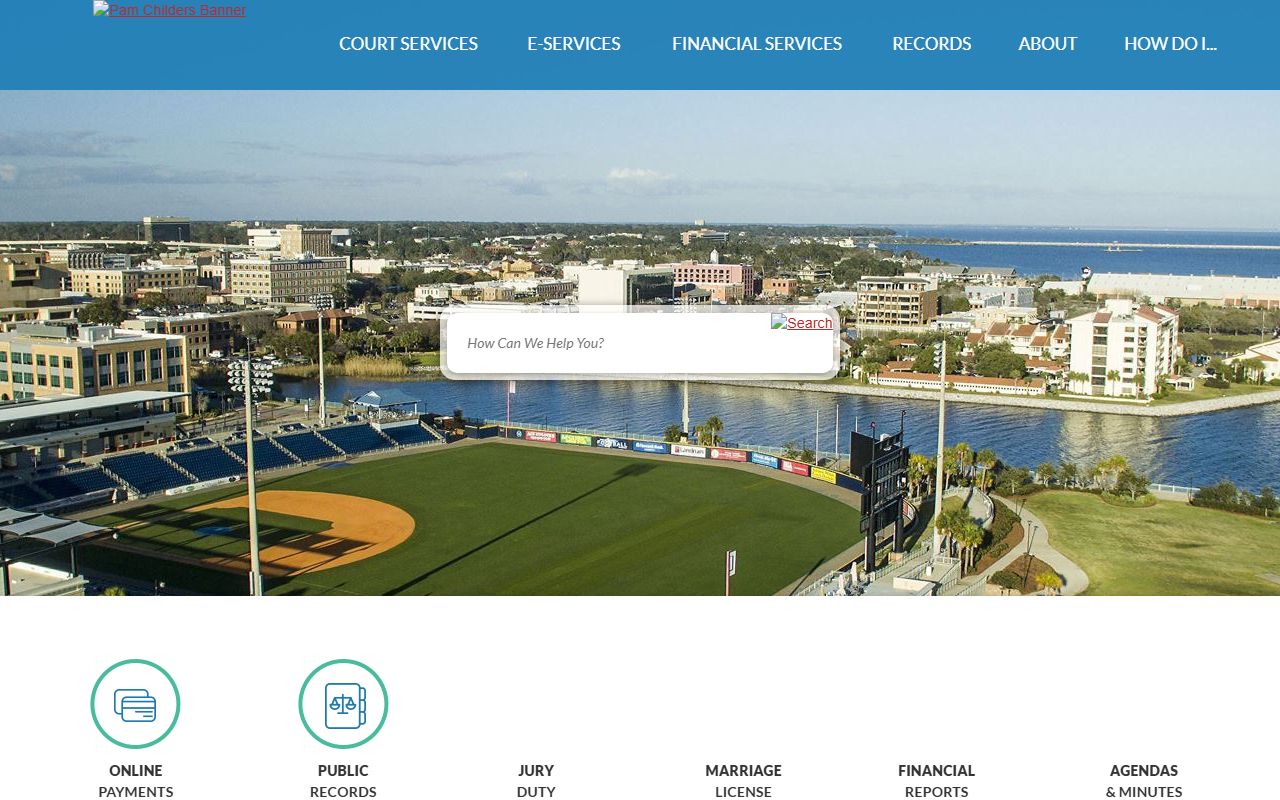
From that page, the Court and Official Records links lead to the public search tools used for Escambia County court records.
Follow these steps to run a basic search:
- Open the Escambia Clerk Court page and choose the public court records portal.
- Pick a search type. Use case-number search when the number appears on a notice or ticket.
- For a name search, enter the last name, then the first name. Skip nicknames.
- Add a date range or division filter, such as criminal, traffic, family, or probate.
- Run the search and open the case summary to view the docket.
- Request a certified copy from the Clerk when you need a legal copy.
The portal exposes a set of search fields. The table lists the common ones and how each is used.
| Field Label | Type | Required | Notes / Format |
|---|---|---|---|
| Case Number | Text | No | Best identifier. Florida numbers include year, court type, and division. |
| Citation Number | Text | No | Used for traffic tickets. |
| Last Name | Text | No | Party-name search. |
| First Name | Text | No | Narrows a name search. |
| Date From / Date To | Date | No | Limits results by filing date. |
| Court Type / Division | Dropdown | No | Circuit Civil, County Civil, Criminal, Traffic, Family, Probate. |
The Escambia County Judicial System
Florida runs a two-tier trial system. Escambia County sits in the First Judicial Circuit, which also covers Santa Rosa, Okaloosa, and Walton counties. The Circuit Court is the general trial court. It hears felonies, family law, probate, guardianship, juvenile cases, and larger civil disputes. The County Court is the lower trial court. It handles misdemeanors, traffic, small claims, landlord-tenant matters, and lower-dollar civil cases.
Appeals from Escambia County trial courts go to the First District Court of Appeal. The Florida Supreme Court is the court of last resort. One note on names: Florida's "District Court of Appeal" is an appellate court, and the federal "U.S. District Court" is a separate federal trial court. The local trial court is the Circuit Court, not a district court.
Case flow: County Court › Circuit Court › First District Court of Appeal › Florida Supreme Court
The First Judicial Circuit posts judges, divisions, and program pages for the region.
This view of the First Judicial Circuit website shows the regional court that serves Escambia County.
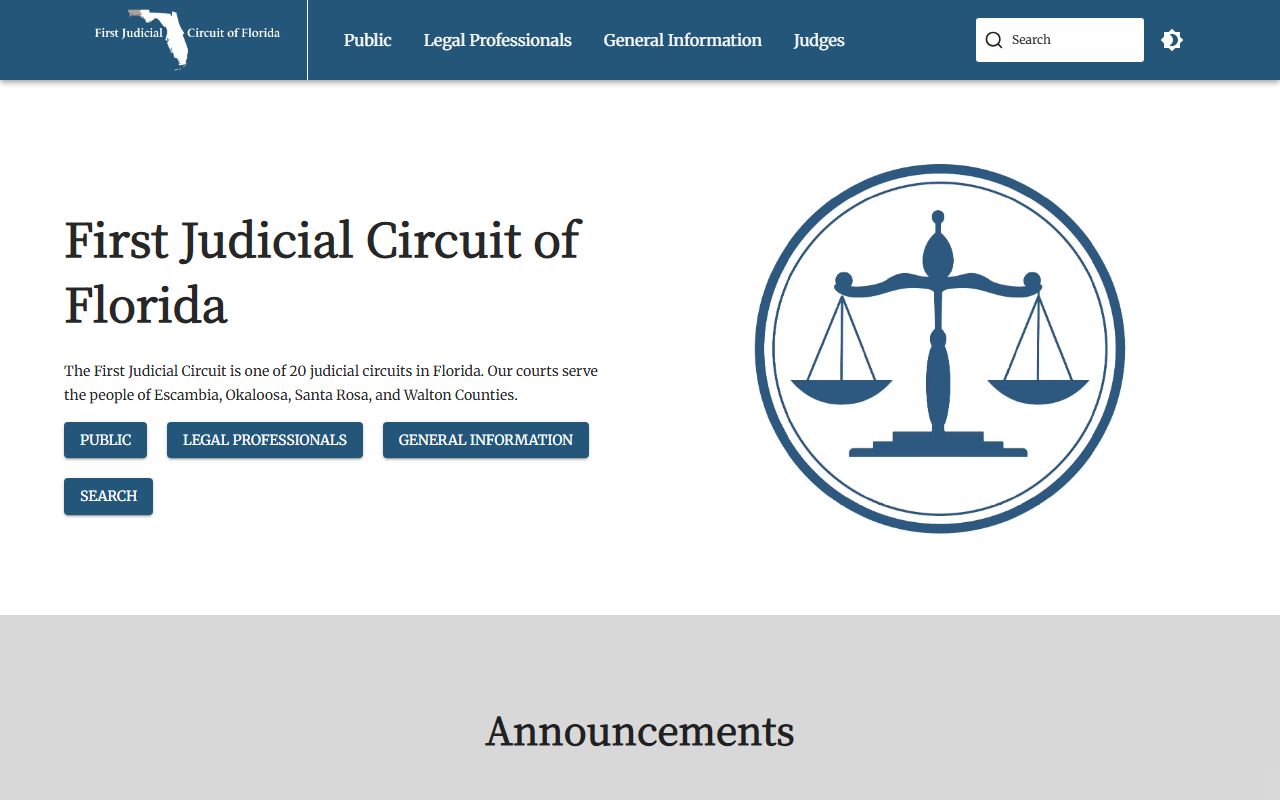
The circuit's pages help you confirm which judge or division is tied to a case before a hearing.
The table compares the two trial courts and the appeals court.
| Court | Level | Case Types |
|---|---|---|
| Escambia County Circuit Court | General trial court | Felony, family, probate, guardianship, juvenile, larger civil |
| Escambia County Court | Lower trial court | Misdemeanor, traffic, small claims, landlord-tenant, lower civil |
| First District Court of Appeal | Appellate | Appeals of legal error from circuit trial courts |
Escambia County Courthouses
Court activity in Escambia County is centered in downtown Pensacola. The main judicial building holds courtrooms, chambers, jury space, and Clerk counters for civil, criminal, traffic, family, and probate matters. The jail and corrections complex sits a short drive north. State Attorney and Public Defender offices are close by in the downtown legal district.
The contact card lists the main court and clerk address. The jail uses a separate address for inmate matters.
M.C. Blanchard Judicial Building
190 W Government Street
Pensacola, FL 32502
Main Escambia County court building
Escambia Clerk of Court
190 W Government Street
Pensacola, FL 32502
Court counters, records, payments
Escambia County Jail
2935 N L Street
Pensacola, FL 32501
Detention and inmate information
Types of Court Records Available in Escambia County
Escambia County court records cover a wide span of case types. Circuit Court produces the records for serious and complex matters. County Court produces the records for smaller, high-volume cases. Each division uses its own case-number style, so a felony file looks different from a traffic file. Public access is broad, but confidential details inside a filing are redacted.
These are the main record types you can look up:
- Criminal records - felony cases in Circuit Court and misdemeanors in County Court.
- Civil records - lawsuits, contract disputes, foreclosures, evictions, and small claims.
- Family and divorce records - dissolution, custody, support, and paternity cases.
- Probate records - estates, wills, guardianships, and related matters.
- Traffic records - citations, court dates, and dispositions.
Some matters also appear in official records, which hold recorded deeds, mortgages, liens, and judgments. Court records answer "what happened in court." Official records answer "what was recorded against property or in the public books."
What Escambia County Court Records Show
A court record is built in layers. The result list tells you whether a case is likely the right one. The case summary gives the filing date, court, status, and parties. The docket lists every event in order. Document images, when public, hold the actual pleadings and orders. A docket line that reads "Order Entered" is not the order itself. The full document or a certified copy shows what the judge actually ruled.
The table breaks down the common fields on a typical Escambia County case record.
| Field | What It Shows |
|---|---|
| Case Number | The Florida case identifier, often with year and division code. |
| Filing Date | The date the case was first filed. |
| Court / Division | Circuit or County Court and the case division. |
| Parties | Plaintiff, defendant, petitioner, respondent, or personal representative. |
| Charges / Cause | The charge or the basis of the civil claim. |
| Disposition | The result, such as disposed, dismissed, or guilty. |
Public Access Laws for Escambia County Court Records
Florida starts from open access. The state constitution and the Public Records Act make most government records open unless the Legislature writes an exemption. Court case records work a bit differently. They are judicial records under a court rule, which sets confidentiality categories and access steps. So Clerk administrative records are public under the records act, while court files follow the judicial rule. The practical result is similar wide access, with different rules for confidential parts.
You do not have to say why you want a record. A request can be made in writing, by email, or in person. Fees are tied to law, and large requests can carry an extensive-use charge for staff time.
The Florida Courts site explains court records access across the state.
This page from the Florida Courts court records resource outlines statewide public access.
It pairs with the local Escambia Clerk portal, which is where the actual case dockets live.
Key Statutes:
Florida Statutes Chapter 119 - the Public Records Act, which opens agency records unless an exemption applies.
Florida Statutes Chapter 28 - sets clerk duties and many copy and service fees.
Florida Rule 2.420 - governs public access to and protection of court records.
Records That Are Restricted or Confidential
Not every record is open. Florida law shields several kinds of files. Juvenile delinquency and dependency records are restricted. Adoption records are sealed. Mental-health and Baker Act files are protected. Grand jury work is secret. Some victim and domestic violence details, along with Social Security numbers and bank data, are redacted from public copies.
Sealing and expunction are not the same. Sealing limits public access but lets some agencies still view a record. Expunction removes an eligible record from ordinary public view more fully, though limited access can remain. Florida usually requires an eligibility review through FDLE before a court petition. A person then files in the court that handled the case. The screenshot below shows the Escambia Clerk public records request page.
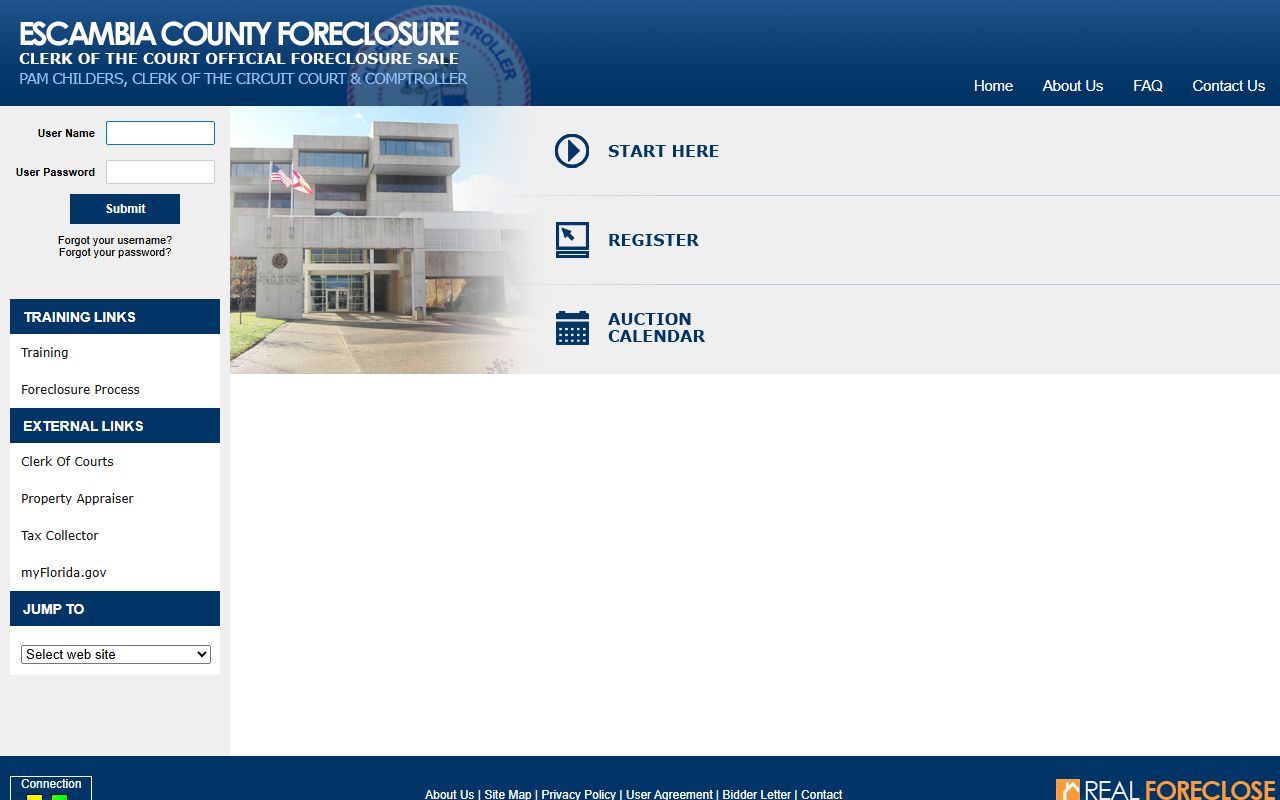
Use that page when a record is not viewable online or when you need a certified copy.
Specialty Courts in Escambia County
The First Judicial Circuit runs problem-solving courts for cases driven by addiction, mental illness, or military service. These programs pair court review with treatment and supervision. Names and rules change, so the circuit's program pages hold the current details.
Two common programs serve Escambia County. Drug Court, or adult treatment court, works with eligible defendants who have substance-use needs. It uses frequent reviews, drug testing, treatment, sanctions, and a graduation track. Veterans Treatment Court serves veterans and service members with qualifying cases. It pairs court monitoring with VA services, peer mentors, and case management. Mental Health Court focuses on defendants whose involvement is tied to mental illness, with treatment plans and judicial check-ins. Eligibility turns on charge type, assessment, prosecutor approval, and judicial acceptance.
Escambia County Sheriff and Jail
Escambia County Corrections runs the county jail. The Escambia County Sheriff's Office, led by Sheriff Chip Simmons, is the main county law-enforcement agency. The public uses Jail View, the county inmate lookup, to find current inmates and recent bookings. The Sheriff's Office separately posts warrant information and a sex-offender unit page.
A booking is not a conviction. Jail View shows custody and booking details. The court docket shows filed charges, hearings, and the outcome. For the full roster details, see Escambia County inmate records. For active warrants, see warrant records. To find a release date or a transfer, see released inmates.
Marriage, Divorce, and Probate Records
The Escambia Clerk issues marriage licenses and records completed ones. Divorce cases are Circuit Court family matters kept by the Clerk. Probate runs through the Probate Division of the Circuit Court. For more on each, see marriage and divorce records and probate records.
A few probate terms come up often:
- Testator
- A person who makes a will.
- Personal representative
- The person the court names to administer an estate.
- Guardianship
- Court-supervised decision-making for a minor or an incapacitated adult.
Escambia County Court Records Fees
Searching public dockets is generally free through the Clerk portal. Copies and certification cost money. Florida sets many of these fees by statute under Chapter 28. The exact amounts sit on the current Escambia Clerk fee page, so confirm the figure before you pay. Plain copies are fine for personal use. Certified copies are the ones agencies and courts usually accept.
The table lists the common copy services. Confirm current amounts on the Escambia Clerk fee page.
| Item | Amount |
|---|---|
| Plain copy per page | Set by Clerk fee schedule |
| Certified copy per page | Per-page copy fee plus certification |
| Certification fee | Statutory per-document charge |
| Extensive-use charge | Added when a request needs heavy staff or IT time |
Note: A portal screenshot is not a certified record, so request a certified copy from the Clerk when the record matters legally.
How to Interpret Escambia County Court Records
Docket words carry exact meanings. "Pending" or "open" means the case is active. "Disposed" means the court entered a result. "Nolle prosequi" means the prosecutor declined to proceed. "Adjudication withheld" is a Florida disposition where the court does not formally adjudicate guilt, yet it can still carry consequences. Read the final order, not just the short docket phrase, before you decide what an outcome means.
A charge is not a conviction. A person can be booked or charged and later have the case dismissed, reduced, or resolved with no conviction. Copy a case number exactly, since Florida numbers can include a year, sequence, court type, and division suffix.
Accuracy and Record Limitations
Online records update on the source system's own clock. A jail booking can post fast. A formal criminal filing may wait for State Attorney review. A docket updates after Clerk processing or a judge's signature. A release can lag because the jail must clear holds and finish paperwork.
Note: For a deadline, hearing, bond, release, or warrant, call the responsible office to confirm rather than relying only on how often a page refreshes.
History of Escambia County Courts
Escambia County is one of Florida's oldest counties, and Pensacola is one of the oldest European-settled towns in the country. The county's legal roots reach through Spanish, British, territorial, and state eras. Modern courts here are part of the First Judicial Circuit. Florida's Article V reforms standardized trial courts into circuit and county courts and replaced older, scattered local courts. The current downtown judicial building concentrates trial-court work in the government district.
For county facts like population and land area, the U.S. Census is the official anchor.
This table from U.S. Census QuickFacts for Escambia County provides official population and demographic data.
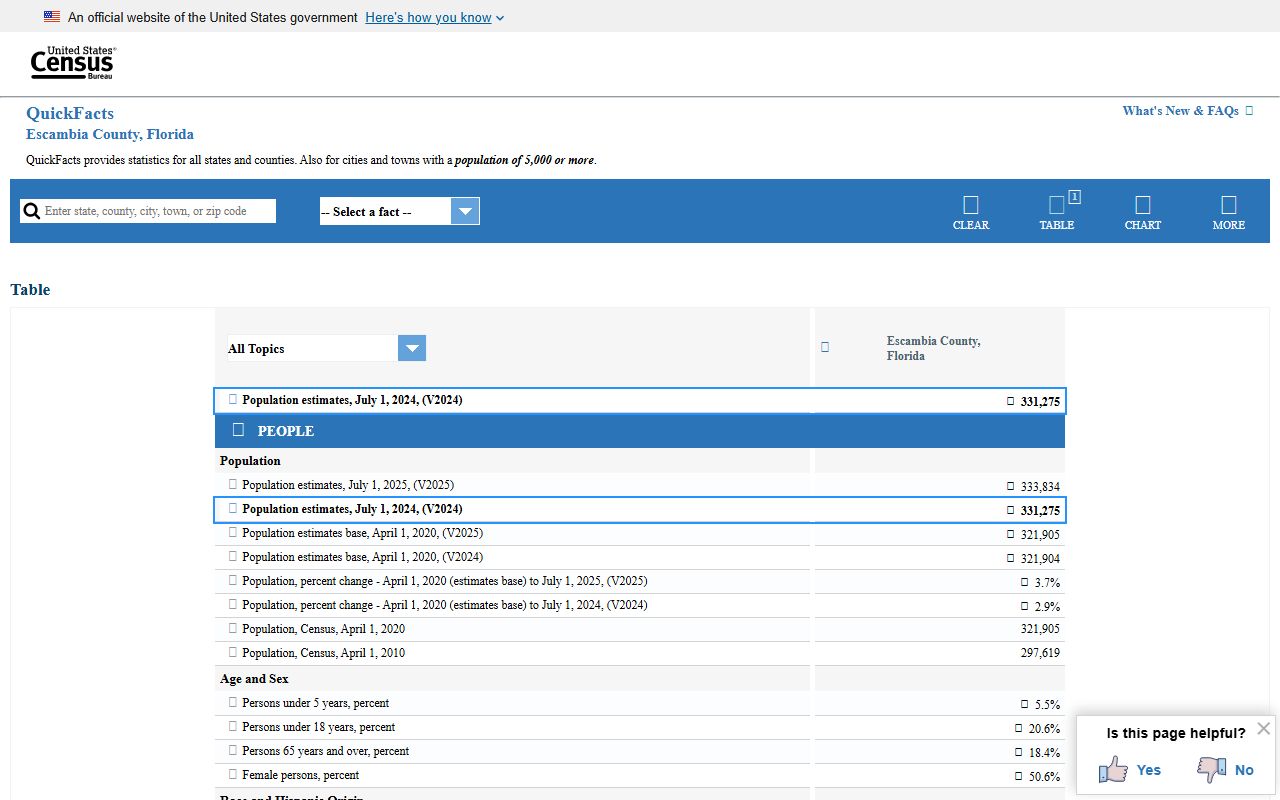
Census figures are a better source for population and county size than third-party summaries.
Frequently Asked Questions
How do I search Escambia County court records?
Use the Escambia Clerk public court-records portal. Search by case number if you have it, since that points to one case. If you do not, use last name and first name, then narrow by division or filing date. For traffic, use the citation number. For probate, search the decedent's name. The portal is a starting point, and certified copies come from the Clerk.
Are Escambia County court records free online?
Searching public dockets is generally free. That does not mean every document image is free or even viewable. Copy charges, certification fees, and extensive-use charges can apply. Sealed, juvenile, adoption, mental-health, and some family records may not appear online at all.
Why can't I see a case online?
The case may be sealed, confidential, juvenile, or too old for online indexing. It might be filed under a different spelling or a business name. Criminal filings can also lag a jail booking. Try alternate spellings, search by case number, and call the Clerk if a deadline is close.
More answers sit on the Escambia County court records FAQ page.